About the prize winner
Kaibo Hu
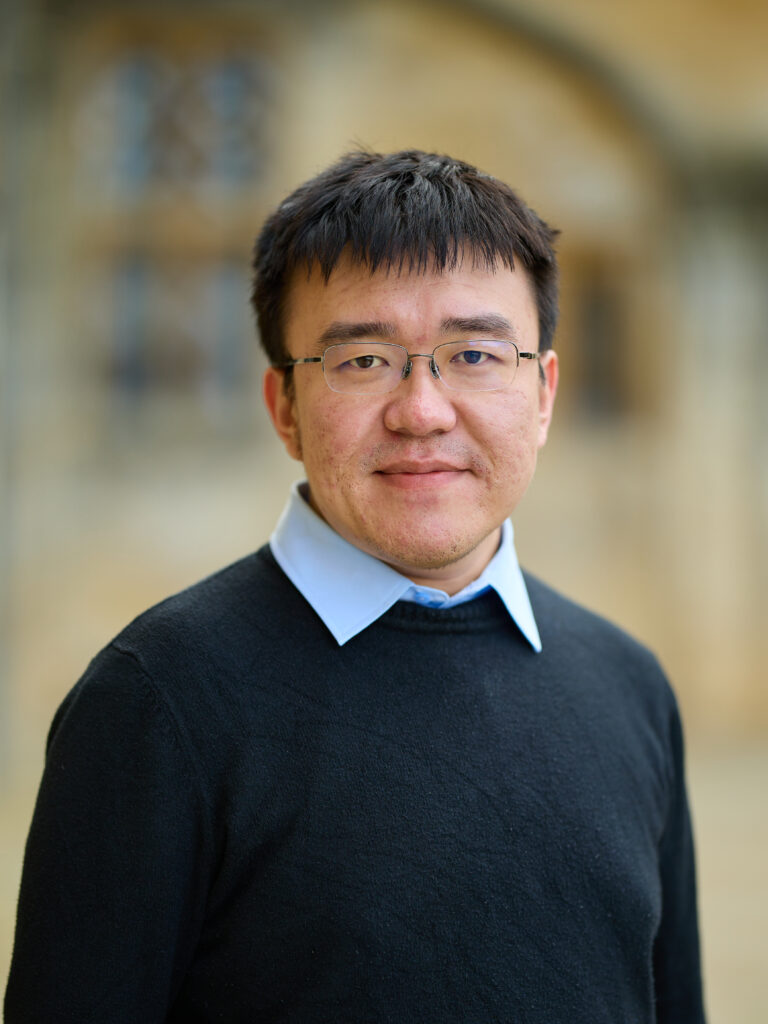
The winner of the sixth Smale Prize is Kaibo Hu, Senior Research Fellow, Associate Professor, and Royal Society University Research Fellow at the Mathematical Institute, University of Oxford.
His work spans several areas of pure and computational mathematics,
contributing significantly to foundations while forging strong
connections to applications.
A significant strand of K. Hu’s research concerns structure-preserving finite element methods for magnetohydrodynamics (MHD). In joint work with Y.-J. Lee and J. Xu,
he introduced the first helicity-preserving discretization for incompressible MHD systems based on
Finite Element Exterior Calculus. In a collaboration with B.D. Andrews, P.E. Farrell, and M.
He on magnetic relaxation problems, K. Hu demonstrated the essential role of
helicity preservation in long-term MHD simulations, underscoring the importance of structure
preservation for the faithful numerical modeling of infinite-dimensional dynamical systems.
The work of K. Hu with D.N. Arnold on Complexes from Complexes has been highly influencial.
This work revisits the Bernstein-Bernstein-Gelfand (BGG) construction from representation theory
and homological algebra, places it within the framework of
Hilbert complexes and Sobolev spaces, and reveals that the algebraic structures underlying many
continuum models—from elasticity and plate theory to linearized relativity—are spawned by the
de Rham complex via the BGG construction.
Building on this, K Hu and A. Čap introduced
twisted complexes as a key stepping stone and established bounded Poincaré
(null-homotopy)
operators in this general setting. This provided tools that were previously available only in special
cases, enabling a deeper understanding of Cosserat elasticity and defects in continuum mechanics.
Another exciting direction of K. Hu’s research is Finite Element Tensor Calculus,
an initiative to replicate the phenomenal success of Finite Element Exterior Calculus for
general tensor fields, both in Euclidean space and on manifolds, by constructing structure-aware
piecewise polynomial models. Initially, with S.H. Christiansen and collaborators, he extended the
theory of Finite Element Systems to higher regularity and vector-bundle-valued settings. This
yielded new commuting exact sequences, most notably finite element complexes tailored to the
Stokes problem and to geometric curvature operators, including the first conforming finite element
complex for aspects of Riemannian geometry in two dimensions. In three dimensions, his
macro-element constructions for elasticity complexes illustrate how BGG ideas and refined local mesh
structures can be combined to produce new conforming spaces for tensor-based continuum models.
In a recent breakthrough result achieved with T. Lin, K. Hu succeeded in devising a discrete
version of the BGG construction, culminating in the broad, dimension-independent construction of
finite element spaces for tensor-valued differential forms. This work both systematizes many
previous ad hoc constructions and may pave the way for robust, structure-preserving discretizations
of tensorial models in continuum mechanics and computational relativity.
K. Hu's work has been seminal. It has inspired a large community of applied mathematicians, and
has sparked vigorous research in structure-preserving modeling and discretization.
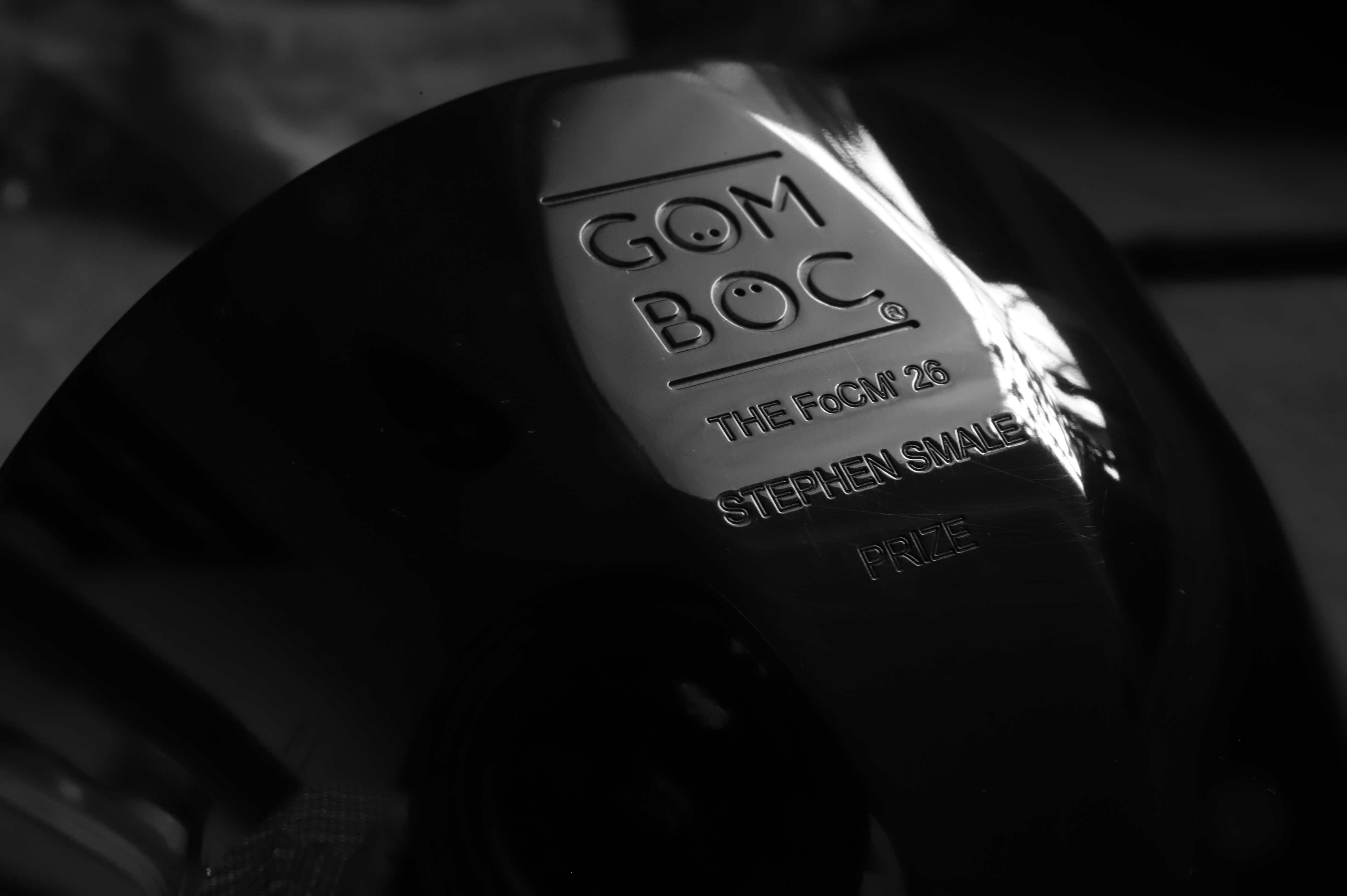
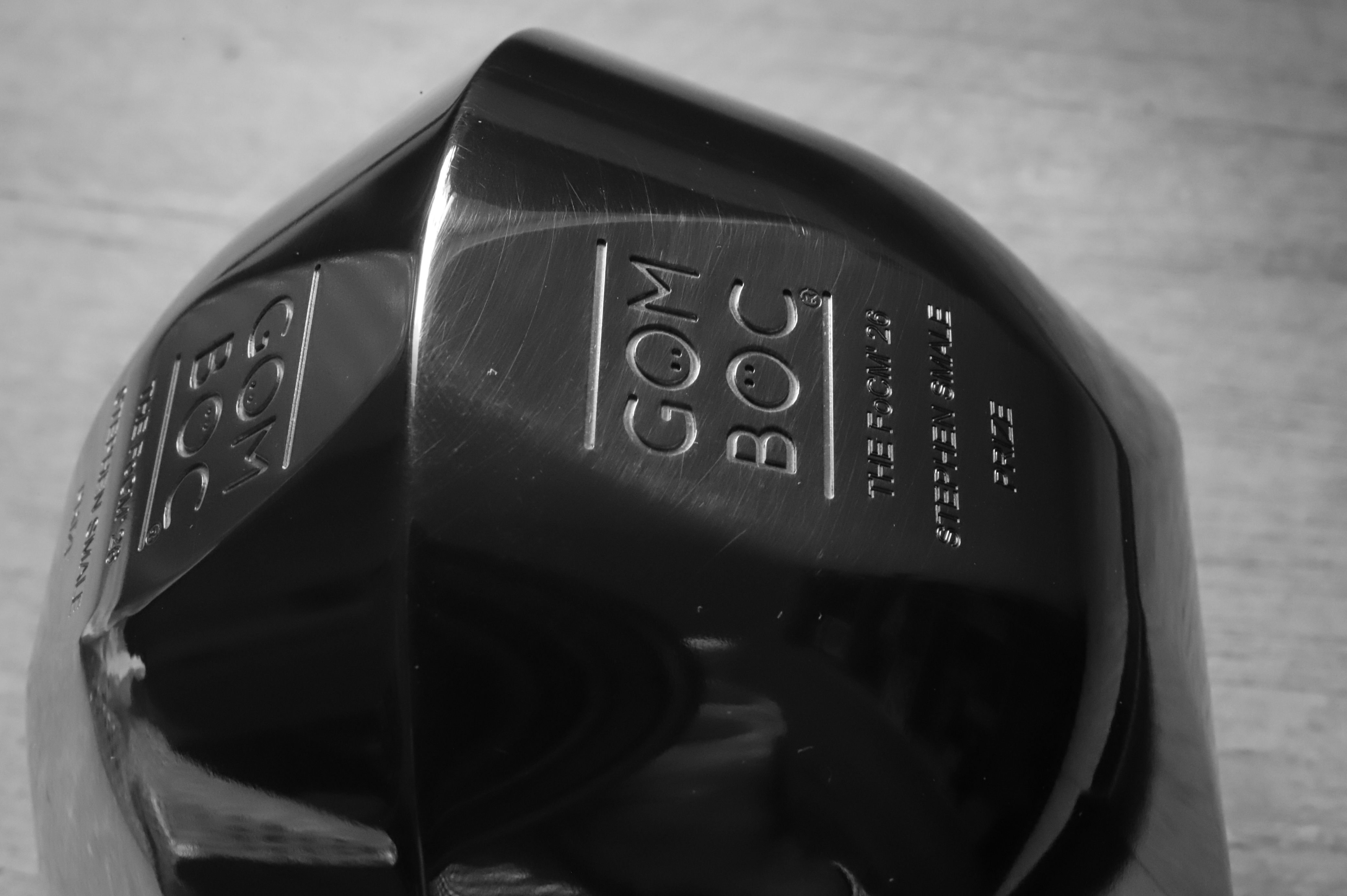
The winner received a "Gömböc" as the prize insignia.
The prize was awarded on July 14th, 2026, at FoCM'26 in Vienna.
| Smale Prize 2026 committee | ||
|---|---|---|
| Ben Adcock | Peter Binev | |
| Peter Bügisser | Elena Celledoni | |
| Evelyne Hubert (chair) | Dan Kral | |
| Melvin Leok | Nilima Nigam |